Quickfire Questions with David James
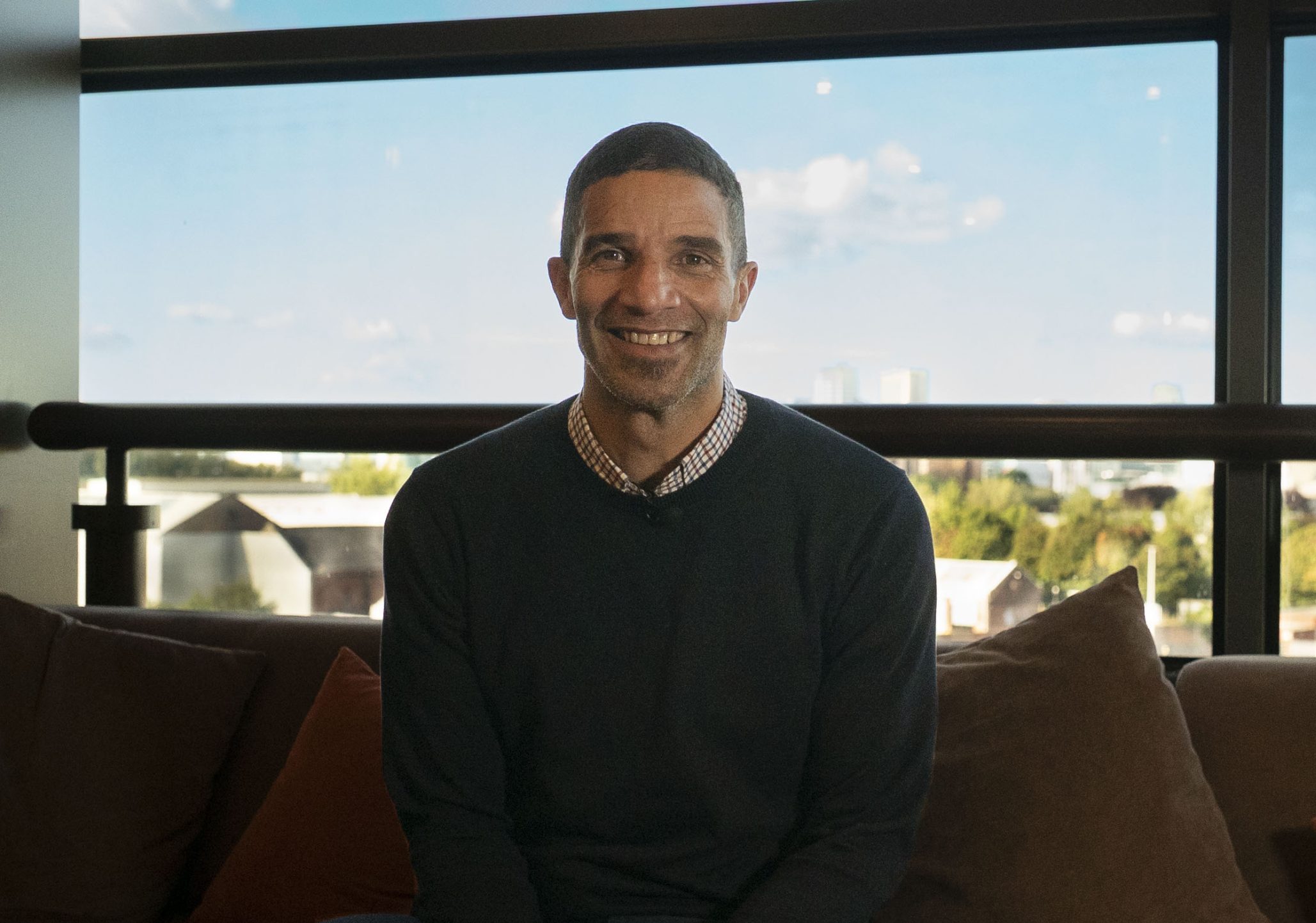
Former Liverpool and England goalkeeper David James joined UCFB where he spoke to students about his illustrious career in football.
David, who earned 53 caps as England’s number one, was our guest speaker at UCFB Manchester Welcome Week for 2025.
Do you want to take advantages of these unrivalled industry connections this September? Do you want to learn about the sports broadcasting industry this September? Apply to UCFB through Clearing and take the first step towards your dream career in football and sport.
During his time with us, he spoke about his career, life after retirement and offered advice and guidance to our students aiming to forge their own career in football and sports.
See what he had to say below…
If you weren’t a footballer, which career path would you have taken?
Ideally, I would have been an athlete, maybe a high jumper. I had the choice of high jump or football at the age of 15.
What’s the best moment of your career?
My debut. You work a long time as a kid to get the opportunity to play professional football at a first-team level, so the debut was it. Without that, you don’t have the career.
What would you say is the best thing about working in football?
The best thing is that you get to try and be the best in whatever capacity that is. You can literally be the best at what you do. I think now with the multiple roles that I have in football, I just think that it is the most amazing sport.
I love what football does to people, to communities, how it brings people together, how it gives people opportunities. I just love everything about football.
What is it that motivates you, whether inside or outside of football nowadays?
Many different things. I love data, I love analysing football through data I love analysing football through video. I still play, albeit charity matches or even with friends, so I love that part of it.
A big thing for UCFB students is relocating. What’s something you’d say to someone who’s relocating for work or university?
As a player and arguably even if you’re a coach, if you are one of the sort of head figures in a football club then there’ll be a local community that know who you are and therefore you kind of try and do as much as you can in the community, but knowing full well that you can’t be.
Plus, this is a beautiful country. It really is. And I didn’t know this because I used to play a game, fly or drive to a stadium, play a game and then go home. Now that I get to go and work at football stadium, I can go there and do a little bit in the town or wherever it is and actually see the area in a larger understanding. And we do have a wonderful country. Get out there and see it would be my advice.
How important would you say education is for professional footballers and athletes?
An average sports career is eight years, and we’re not talking eight years at Premier League international level, that’s eight years across football. So that would in large part be players who are playing at the lower end of the footballing spectrum.
So to come out of that and have no education means that you’ve basically got to start your life as a mid-20-year-old.
Do it while you’re starting at football, while you’re young, get the qualifications. I think it will keep you interested in that educational path.
And depending on what qualifications you’ve got, you can have the career and use those qualifications while you’re playing to drive another business somewhere.
What was it that’s attracted you to being a pundit?
Again, the world’s very strange because when I was playing, I hated pundits. Most pundits.
I used to write columns in a newspaper when I was playing. It was everything to do with the sort of peripheral stuff, the environment, stigmas, travel, whatever it might be, and so I used to write about that.
When it came to the media side of things, I was asked to take on a role where I was talking about football, but also bringing my other interests, if you like loosely. You know, if summer scores a great goal, I wasn’t talking about how many tons of carbon were being used in the process, but it was a slightly more quirky view on things.
I was happy to do that, rather than just go down the old cliched line of ‘Great player, great goal.’
What is the best thing about specifically working in sports media?
For me, it means I get to watch loads of videos, do loads of data. Again, it’s really interesting. There’s so many different roles in this.
Some people are fantastic at analysing tactics and formations, some people are fantastic at analysing the actual individual skills in the game, some people are just great for talking to people to listen to.
What advice would you give to someone who wants a career in sport?
If you’re going to be the guy in front of the camera, be good at talking in front of the camera. It’s probably better you are a football fan, but there’s a lot of guys out there who are presenting and you don’t know who they support.
Be good at what it is you want to be. Be a football fan if you want to be a football fan, of course. But these are specific jobs which require specific skills.
Can you describe the life of a professional footballer in just one word?
Difficult.
If you want a career in football and sports, whether it’s related to business, coaching or media, check out UCFB’s array of industry-related undergraduate degree courses.
You can also view a prospectus to learn about the unique courses, campuses and everything about life at UCFB.


You may also be interested in

Academics
April 7, 2026 |
UCFB academic offers insight into Sheffield Wednesday finances on BBC documentary
Read Post

Work Experience
June 20, 2025 |
UCFB business student gains experience in United States at Florida baseball side
Read Post

Student Life
July 12, 2022 |
UCFB students reflect on Clearing process
Read Post
Our Partners